
Quick answer: A seasonal property maintenance checklist works best when it starts before the weather changes. Map each building’s climate risks, work back from the exposure date, assign a named vendor and owner to every roof, drainage, HVAC and plumbing task, and keep ‘vendor reported done’ separate from ‘verified complete’.
A seasonal property maintenance checklist is most useful before the weather changes, when contractors can still inspect systems, order parts and correct defects. Starting only after the first freeze or major rain can turn ordinary tasks into disruptive repairs.
Seasonal planning should reflect the building and its climate. A coastal property’s drainage preparation will differ from a high-altitude property’s winterisation or an arid region’s heat-readiness programme. The aim is not more reminders. It is a documented sequence of checks, accountable vendors and confirmed evidence.
Build a climate-specific risk map before assigning visits
List the weather conditions that actually affect your portfolio: freezing temperatures, prolonged rain, snow loading, high winds, humidity, drought or extreme heat. For each building, match those exposures to assets, likely failure paths and the action that can reduce harm.
An apartment building with flat roofs and interior drains may need early debris removal and drainage checks. Another property may prioritise boiler servicing, pipe freeze protection or HVAC condensate control. Roof, drainage, plumbing and HVAC upkeep are connected: a blocked drain can become a moisture problem inside the building.
Ask an authorised facilities specialist to distinguish preventive items from required statutory inspections. A vendor confirmation call can show that work is scheduled; it does not prove that a building is safe or that a legally required test has passed.
Turn the season into a workback plan
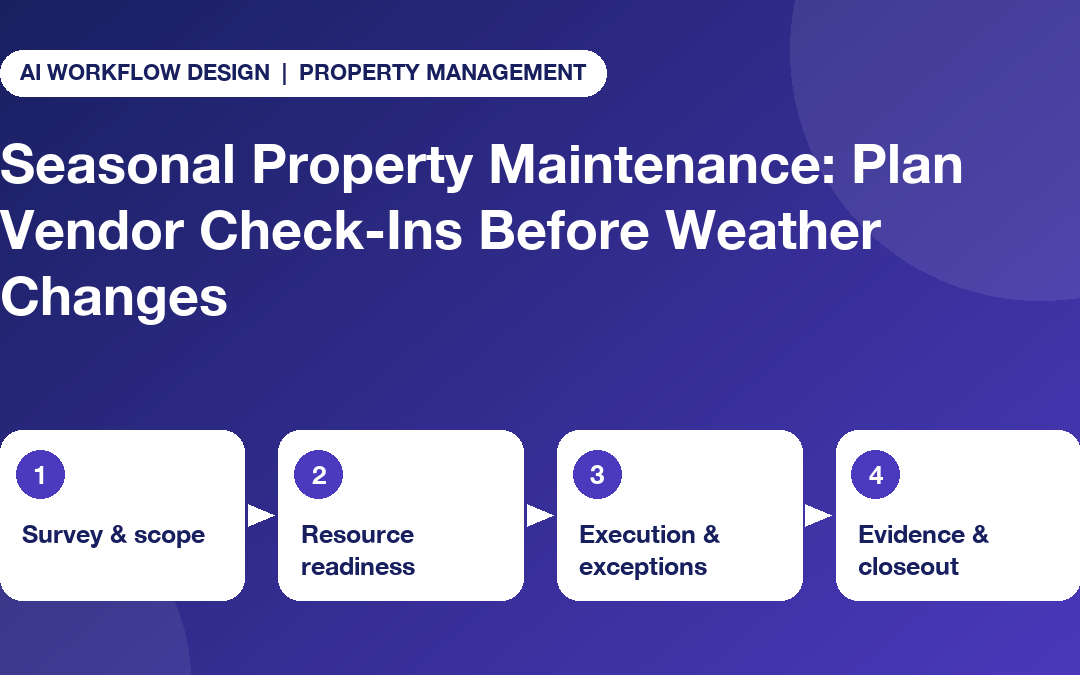
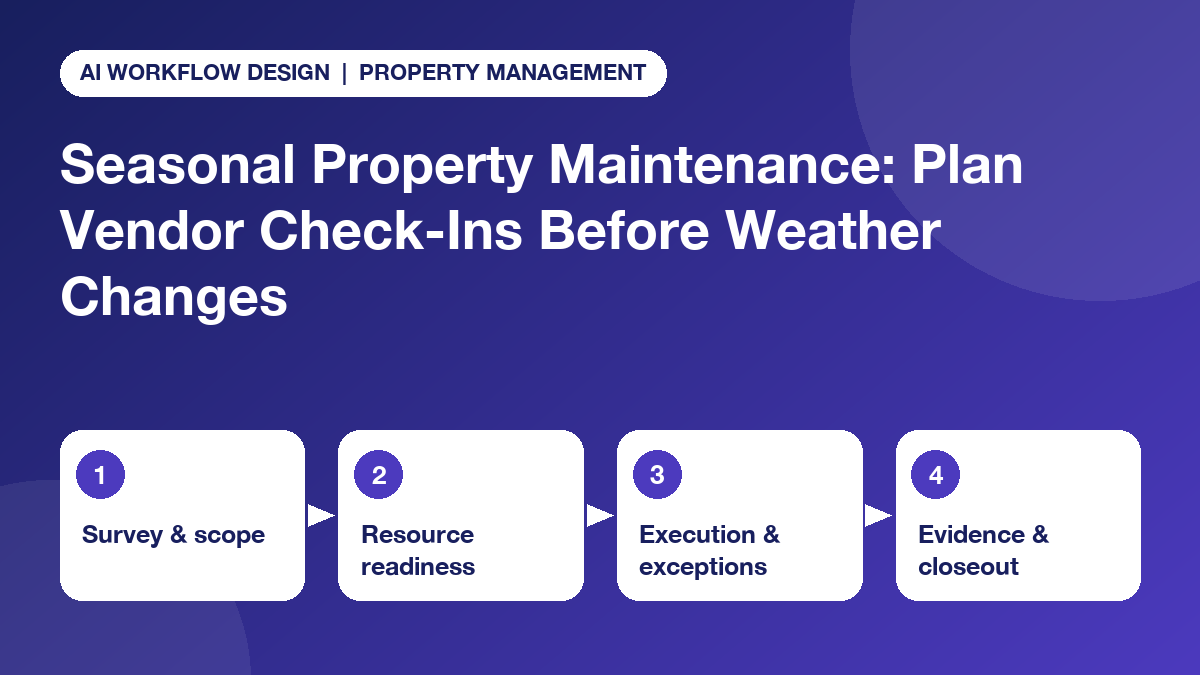
Work backwards from the weather exposure or deadline, not from the day the vendor is free. A useful plan contains four checkpoints.
- Survey and scope: Identify vulnerable buildings and confirm what inspection, cleaning, testing or repair each asset needs. Review last season’s incidents, complaints and unresolved defects.
- Resource readiness: Check contractor assignments, access routes, necessary permits, replacement parts, weather-dependent work windows and resident notice requirements.
- Execution and exception review: Ask vendors for attendance and progress updates against named work orders. Escalate blocked, partial and high-risk work to the responsible manager.
- Evidence and seasonal closeout: Collect photographs where permitted, service reports, inspection records and remedial-work lists. Have an authorised reviewer verify completion and carry forward open items.
Use actual service schedules and locally appropriate notice periods. A ’30 days before winter’ rule can be misleading when contractors are heavily booked or cold weather arrives early.
A seasonal maintenance checklist by building system
The checklist below is a planning framework to tailor with local specialists and vendor contracts; it is not a universal technical specification.
- Roof and drainage: Check roof defects, gutters, scuppers, drain covers and areas where water accumulates. Keep photos and a remediation owner for each finding.
- HVAC and ventilation: Confirm seasonal service, filters, condensate routes, controls and documented performance tests appropriate to the equipment.
- Water and plumbing: Review known leaks, exposed pipe locations, insulation conditions and critical shutoff access with qualified trades.
- External access: Inspect walkways, handrails, lighting and weather-related slip or obstruction risks, without treating a phone reply as an on-site inspection.
- Landscaping and grounds: Coordinate overhanging branches, stormwater paths, irrigation shutdowns and site-specific preventive work.
- Resident communication: Check lawful access, expected disruption, alternative contact routes and the procedure for genuinely urgent events.
A high-quality schedule assigns a person to every unresolved finding and ranks assets by how critical they are, so preventive effort goes where a failure would hurt most. For the recurring visit side of this work, see our vendor confirmation workflow for preventive maintenance visits.
Schedule calls around dependencies, not every calendar date
A calendar reminder may be enough to confirm a standard appointment. A phone check-in is more useful where a missing answer blocks a second contractor, a building shutdown, resident access or a scheduled inspection.
For example, an HVAC contractor may confirm a winter service booking but explain that a control component is on backorder. A useful call response contains the reported shortage, a revised date for vendor confirmation and the named manager who will review the risk. It should not automatically change the property’s readiness rating to ‘safe’.
With Autoza AI’s monday.com check-in capabilities, a team can explore scheduled calls to selected task owners. The organisation must still configure its authorised questions, update rules and escalation routes. Do not assume the calling tool knows the requirements of a particular climate or jurisdiction.
Model the seasonal programme in monday.com
Keep a board or set of project tasks that can be filtered by property, exposure, asset and due window. Recommended fields include ‘season’, ‘work order’, ‘contractor’, ‘service appointment’, ‘reported vendor status’, ‘evidence received’, ‘reviewer sign-off’ and ‘open risk’.
A useful distinction is between appointment confirmed, work reportedly done and work verified. If the vendor’s call says all gutters were cleaned but no required report has been received, the evidence field remains open. For more detail, see our guide to mapping vendor call answers to monday.com maintenance status fields.
Use filtered views for each site team. A manager preparing for heavy rain needs the outstanding roof and drainage exceptions, not a single undifferentiated list of every seasonal task on the portfolio.
Handling missed visits and severe-weather changes
Weather may make a visit unsafe or impractical. Record whether the vendor has proposed a new window, whether access can still be arranged and who must make the operational decision. A contractor saying ‘we will come tomorrow’ is not proof that the appointment is reconfirmed with all parties. If a visit fails because nobody could get in, follow the no-access rescheduling workflow for vendors and residents.
If urgent weather risks emerge, established emergency and safety procedures override the regular call cadence. Do not use a recurring AI call to dispatch emergency services, approve shutdowns or determine whether a site can remain occupied.
Review exceptions daily during exposed periods, with severity assessed by qualified people. A report of active water entering a unit should route through the responsible urgent-maintenance process rather than wait for the next seasonal check-in.
Measure outcomes, not call volume
Review the share of planned inspections completed before the target window, overdue critical tasks, first-time visit completion, missing service evidence and repeat seasonal defects. Compare those measures across properties with similar risk exposure rather than assuming one benchmark suits every building.
Scheduled voice follow-up is useful only when the new information prompts a timely decision. Reduce unnecessary calls where portal updates or existing confirmations already provide reliable status; our comparison of vendor calls vs portal notifications helps decide which channel fits. The best seasonal plan is the one that helps managers act before a preventable problem grows.
Make seasonal preparation more visible
If your property team uses monday.com for recurring maintenance, explore scheduled Autoza task-owner check-ins and request a workflow discussion. Start with one defined seasonal programme, keep inspection and safety approval with humans, and improve the cadence from measured outcomes. Explore more property management workflows too.
Frequently asked questions
How early should seasonal property maintenance begin?
Work backwards from locally expected weather and contractor capacity. Critical roof, drainage and heating work may need several weeks of lead time for inspection, parts and tenant notices; each property should set its own schedule rather than use a universal date.
Which seasonal maintenance tasks are the most urgent?
Prioritise threats to occupant safety, active water intrusion, essential heat or cooling, access hazards, fire systems and vulnerable assets according to qualified assessment and local requirements. Routine landscaping or cosmetic jobs can have different windows.
Can an AI follow-up call certify that a building is winter-ready?
No. A call records a person’s report, not a physical inspection, test or regulatory sign-off. The property manager needs qualified inspection results, required documents and any formal acceptance process.
Should every region use the same winterisation checklist?
No. Freezing weather, heavy rainfall, hurricane exposure, wildfire smoke and extreme heat generate different seasonal priorities. Adapt each checklist to the building type, climate, equipment manuals, lease responsibilities and local rules.
How can teams avoid repeatedly calling the same vendor?
Assign one approved contact per work order, bundle related tasks when appropriate, trigger check-ins at real decision points, and use one owner to review responses. Review call usefulness and allow a non-phone status channel when it serves the same purpose.