
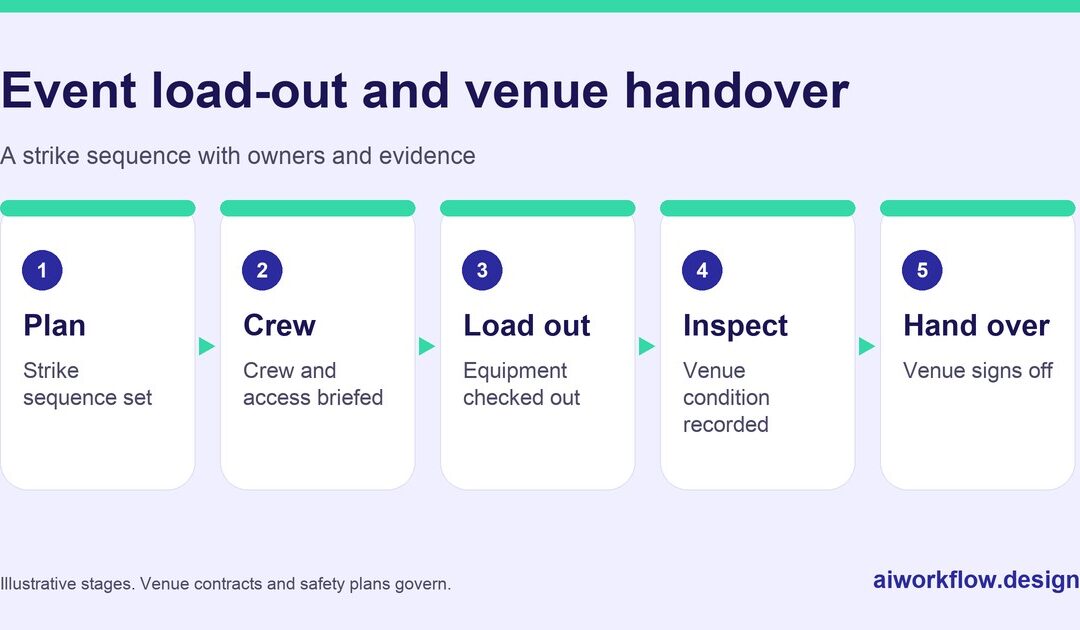
Quick answer: An event load out checklist, including venue handover, should assign ownership for the strike sequence, worker and vehicle access, supplier equipment returns, waste removal, venue condition evidence, and final acceptance. It must distinguish an operational update from clearance to dismantle, close a work area or release a venue. Trained supervisors and venue representatives retain control of safety and contractual handover decisions.
The stage has gone dark, attendees are leaving and the operations team wants the room empty before morning. Two freight elevators are shared with another show. A rental vendor is ready to collect speakers, but the scenic team is still dismantling a wall beside the loading route. Meanwhile, a venue employee photographs a damaged floor panel. A successful show can still end with injuries, disputes and late fees if its load-out is handled as an unstructured rush.
Treat load-out as a separate production phase
Load-in and load-out often use the same dock, suppliers and equipment but not the same conditions. Crews may be fatigued, temporary barriers may have been moved, people may work in overlapping zones and venue staff may have changed shifts. The Event Safety Alliance describes event safety as spanning setup, operations and breakdown; its guidance is relevant well after guests have left.
Start with the contracted access window, venue rules and site-specific risk arrangements. Confirm who controls the floor, loading dock, lift routes, vehicle movements, work at height, power isolation and restricted zones. A general timetable does not replace the competent crew’s method statement, manufacturer instructions, applicable regulations or a required permit. Unsafe or changed conditions should pause affected work until the responsible supervisor reassesses them.
Load-out mirrors arrival planning, which is covered in event load-in scheduling.
Build the strike sequence from dependencies, not a countdown
The operational question is not only “When can AV leave?” It is “What needs to be true before this vendor can begin?” A typical sequence may involve guest egress and area control, safe shutdown, removal of content equipment, rigging or structural dismantling by qualified crews, freight movement, waste collection, floor inspection and handover. The sequence differs by venue and production design.
Identify dependencies explicitly. A supplier cannot safely pull a cable routed beneath an active temporary structure merely because a truck is waiting. A truck cannot enter the dock until vehicle traffic is controlled. A cleaner cannot close a zone while heavy equipment remains in use. When multiple work packages overlap, the site lead—not the board automation—must authorize the working arrangements.
A handover checklist with separate owners
- Confirm release from public use. The venue’s designated representative establishes which areas are cleared and available for strike. Record the permitted time, not a guess based on the show’s end time.
- Hold a crew briefing. Share the zone plan, access routes, weather or floor conditions, emergency arrangements, changing hazards, lifting requirements and the named stop-work contact.
- Verify technical shutdown. Electrical, rigging and specialist systems are made safe by qualified personnel under applicable procedures. An administrative tick box cannot certify isolation.
- Coordinate supplier removal. Cross-check the supplier inventory, item references, truck allocation, pickup appointment and loading-dock sequence. Keep hired items separate from venue-owned and organizer-owned assets.
- Record damage and exceptions. Capture timestamped condition evidence, location, report owner and the contractor or venue contact notified. Avoid allocating liability before reviewing the contract and facts.
- Confirm cleaning and waste removal. Match waste movements to the contracted disposal route, cleaning scope and venue restoration requirements. A swept floor does not prove all rented equipment has been returned.
- Obtain venue handover. The authorized representative reviews agreed conditions and signs or records acceptance, outstanding items or a disputed condition. Closure in monday.com follows that decision, not the other way around.
The final step may result in accepted with exceptions rather than fully accepted. Record the specific exception, the owner, evidence required and any commercial consequence requiring separate review.
Scenario: a late truck and a disputed floor mark
Imagine an exhibition dismantle in which a freight company misses its assigned dock slot. The team moves a display crate into a corridor, then learns that the corridor must remain open for another contractor. Separately, the venue reports a scratch near the entrance. Two problems now need two different workflows: the logistics lead must rebook the truck and maintain safe storage; the venue and organizer must document the floor condition and review the pre-event photos.
The event operations board can show “truck delayed” and “damage under review” simultaneously. It should not mark the venue as handed back, charge a specific supplier, or declare a walkway compliant based only on a telephone response. The affected area remains under the venue’s control and required safety decisions remain with the responsible people.
Design monday.com around zones and handover evidence
Use a parent event with linked zone-level or supplier-level items. Helpful columns include Event, Zone, Work Package, Responsible Supervisor, Earliest Safe Start, Predecessor Task, Dock Slot, Vehicle Reference, Crew Briefing Status, Technical Clearance Reference, Inventory Return Status, Condition Photos, Venue Reviewer, Exception and Handover Decision.
Use clear states: Not Released, Released for Work, Active, Awaiting Specialist Clearance, Physical Removal Complete, Condition Inspection Pending, Accepted with Exceptions and Handover Accepted. A truck departure is not venue acceptance; missing equipment is not the same as a defect in a wall. Separate fields make the difference searchable at the next claims review.
A board automation can notify the next owner when a human-approved predecessor is recorded complete. It should not remove a hold automatically because time passed. If the venue issues a revised dock schedule, record the old assignment, timestamp and new approved instruction so teams are not working from conflicting screenshots.
Keep equipment returns and venue condition separate
Many event teams already track AV rentals or supplier returns. Those inventories are important but do not cover the whole venue handover. A sound closeout package has at least three linked evidence sets: the supplier return records, the condition and damage record, and the formal site handover decision. A missing wireless microphone should be chased with the rental vendor; a scuffed floor should follow the incident and contract review route; an uncleared overhead structure belongs to the competent technical lead.
This separation also helps resolve payments. A vendor’s final invoice may be due even when an unrelated venue condition dispute remains unresolved. Conversely, an equipment receipt may not establish that a venue restoration obligation was met. Follow the applicable agreements, preserve original records and avoid making unilateral deductions without appropriate review.
For the supplier side of returns, see post-event equipment return follow-ups.
Useful AI check-ins during load-out
AI Workflow Design offers Autoza AI for monday.com and a Daily Check-in Agent for administrative status collection. A permitted supplier check-in might ask whether pickup reference X was collected, whether a signed return sheet is available, or who can provide the final disposal confirmation. This can help when several vendors depart on different schedules.
Do not send an AI caller to instruct workers on rigging, decide whether an overhead load is safe, authorize electrical work, assess a reported injury or accept damage liability. Urgent safety incidents must use the venue’s emergency and escalation procedures rather than wait for the next scheduled check-in. Give call recipients a clear human escalation contact and use any recording only under the project’s applicable consent and retention rules.
Review the finish, not just the finish time
A short post-event review should compare planned and actual dock slots, repeat rebookings, overtime drivers, unresolved damage reports, equipment discrepancies and acceptance exceptions. Record whether delays came from unrealistic dependencies, changed venue rules, a late sponsor activation or a supplier delivery mismatch. Then update the next venue-specific run-of-show and strike plan.
The objective is not simply to leave quickly. It is to leave with safe work completed by the right people, a clear evidence trail, controlled commercial exceptions and an agreed point at which the venue resumes responsibility.
Next step
Want these follow-ups handled consistently? Explore Autoza AI for monday.com or talk to AI Workflow Design about scheduled, permissioned status follow-ups that leave approvals and decisions with the right people.
Related guides:
- Event Load-In Scheduling: Prevent Loading Dock and Delivery Conflicts
- Post-Event Equipment Returns: A Supplier Follow-Up Workflow
More guides: browse our event production workflow guides or see all industries we support.
Frequently asked questions
What is an event load-out checklist?
It is a controlled plan for dismantling the event, removing equipment and waste, managing suppliers, checking site condition and obtaining venue handover from authorized personnel.
Who signs off a venue after an event?
The person or organization designated in the venue agreement and site procedures. A supplier may confirm its own removal is complete without having authority to accept the venue on behalf of others.
Is a rental equipment return receipt the same as venue handover?
No. It proves a specific supplier transaction, subject to its terms. Venue handover separately covers premises condition, access, cleaning, damage and any outstanding obligations.
What happens when damage is discovered during strike?
Preserve photos and timestamps, notify the agreed contacts, protect the affected area if needed and follow the contract’s reporting and dispute process. Do not assign blame from an unreviewed status update.
Can automated calls authorize dismantling work?
No. They may request administrative progress updates. Competent supervisors and venue representatives must make safety, technical and handover decisions.