
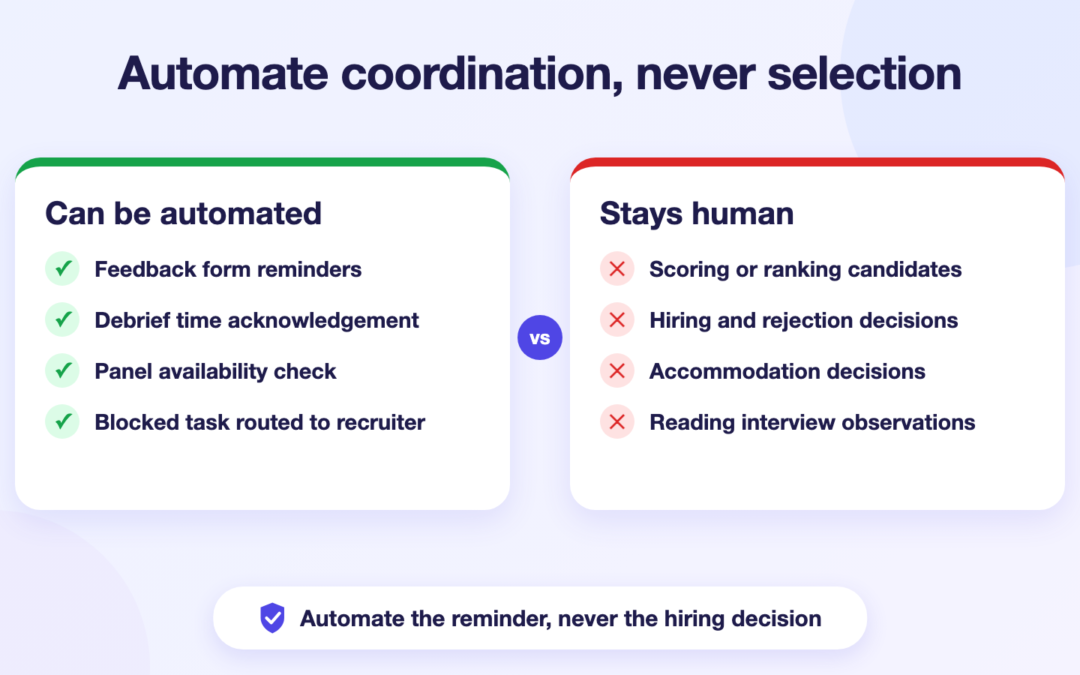
Interview panels generate a familiar recruitment bottleneck: the interviews are complete, but individual scorecards, debrief attendance and hiring-manager responses arrive at different times. Interviewer feedback follow-up calls can help a recruitment coordinator identify which administrative actions are still open. The boundary is crucial: an automated caller may ask whether an authorised reviewer has submitted feedback, but should not independently evaluate candidates, rank applicants or issue hiring decisions.
For recruiting teams using monday.com, a structured task board can make follow-up consistent without collecting protected personal information in a voice transcript. This article explains what to ask, how to route exceptions and where the recruiting team must retain direct responsibility.
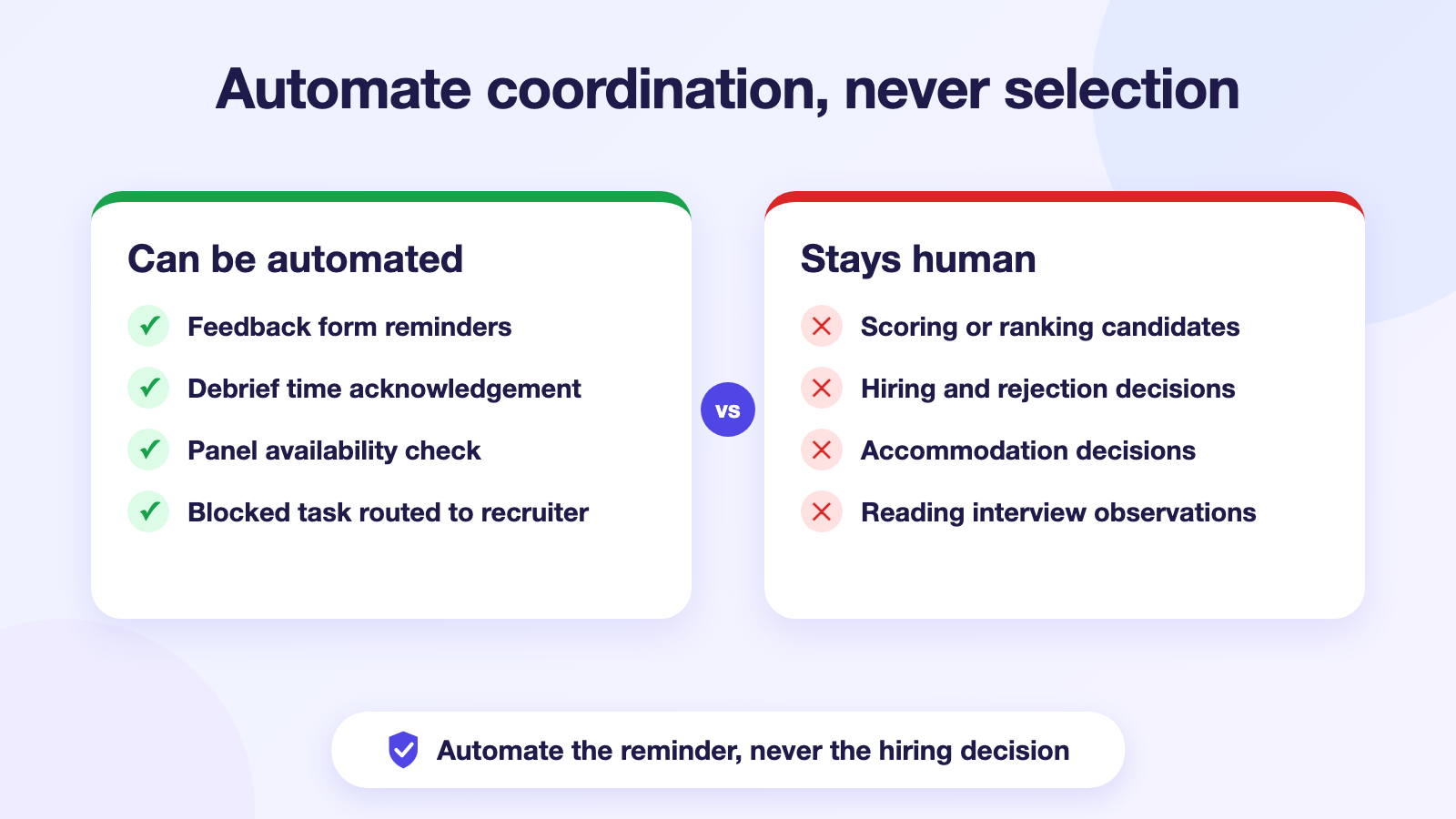
Separate coordination from selection
Coordination asks whether an interview took place, whether an assigned person has submitted the required form and when a pending action might be completed. Selection involves judging competencies, comparing candidates, making accommodation decisions and deciding who progresses. Those activities carry employment-law, fairness and professional-accountability implications that cannot be solved by merely automating a telephone conversation.
The U.S. Equal Employment Opportunity Commission has published guidance on AI and employment discrimination, including potential disability and disparate-impact issues when automated tools affect employment selection. A simple interviewer reminder workflow is different from algorithmic candidate selection, but the distinction should be documented so that an operational tool does not expand into evaluating people without appropriate review.
Design an interview follow-up task map
Create a project item for an open vacancy and subitems for the interviewer actions. Example: role code R-214, interview panel A and B, form owner, submitted yes/no, debrief time and escalation owner. If multiple candidates are involved, use restricted-access records appropriate to the recruitment team’s confidentiality policy. The calling agent generally needs the workflow task reference, not applicant medical details or a free-form narrative about the individual.
- Assigned reviewer: the correct person to submit the scorecard.
- Requested action: complete a secure feedback form or acknowledge a debrief invitation.
- Administrative state: not due, awaiting response, submitted, needs clarification or escalated.
- Deadline: based on the agreed hiring timeline, not a fabricated AI urgency score.
- Next owner: recruiter, panel chair or hiring manager responsible for resolving the delay.
Use a separate secure applicant-tracking or assessment system for candidate evaluation. Do not dump interview observations into public monday.com comments or call summaries merely because a caller can collect speech.
An appropriate 60-second follow-up call
A permitted call can identify the organisation and AI nature of the caller as required, verify it is speaking to the correct authorised panel member, and ask: “Have you submitted the feedback form for interview reference R-214?” If the answer is no, it can ask “When do you expect to complete it?” and “Is there an administrative blocker the recruiter can help resolve?” The safest answer categories are task completion, expected submission time and assistance required.
The call should not ask: “Do you think the applicant is too old?” “Would their disability make the role difficult?” “Which candidate should we reject?” or “Tell me everything you disliked about the person.” It should not solicit demographic, medical, family or immigration information except through specifically authorised and lawful processes outside routine calling. Avoid subjective free-text collection, which can create extra confidentiality and discrimination risks.
Choose channels and escalation by urgency
For a non-urgent scorecard, start with the organisation’s approved task reminder. A short follow-up call becomes useful when the panel member has not seen the reminder and a decision meeting is approaching. If the reviewer reports an accommodation or fairness concern, route it to the authorised HR or legal lead through a confidential channel. If a reviewer is out of office, reassign the task through the recruiting manager rather than repeatedly calling the same person.
The Autoza AI product description supports scheduled check-in calls, board updates, configurable retries and call summaries. A recruitment-team configuration would need approved scripts and field mappings that capture administrative states only. The product’s published capabilities do not establish that it performs compliant applicant screening or automates interview evaluations.
Respect the candidate and the panel member
Panel members should understand why calls are made, what is recorded or transcribed, the expected hours and how to raise objections or change contact preferences. For U.S. calls, the FCC’s declaratory ruling on AI-generated voice calls clarifies that applicable TCPA artificial-voice requirements can apply; obtain qualified review of consent, disclosure and exemptions before deployment. Other jurisdictions have different privacy and telecommunications rules.
Interview data access should follow a need-to-know approach. Keep the candidate identifier minimal in the call, avoid full names when unnecessary, restrict transcripts and establish a deletion schedule. Consider accessibility: a panel member may need a text-based or human alternative to a voice call. An unanswered phone call is not evidence of poor performance or unwillingness to cooperate.
What a recruiting operations dashboard should show
Use administrative measures: percentage of scorecards submitted before debrief, median time to submission, number of overdue panel actions and exceptions routed to humans. Break down recurring bottlenecks by process stage, not by protected individual traits. Review whether repeated calls help or simply create fatigue. If the panel’s form is too long, reduce friction at the source rather than calling more often.
The correct automation goal is to move tasks forward while preserving fair, human-controlled hiring decisions. For a narrow pilot, choose one vacancy type, define three approved status questions and test the resulting field updates with the recruiting team. To map such a workflow, request a guided discussion. For related guidance, see our hiring manager feedback follow-up workflow and placement start-date check-ins.
Frequently asked questions
Can an AI caller ask an interviewer whether feedback has been submitted?
Yes, as a narrowly scoped administrative check where the calling arrangement is lawful and approved. It should record submission status or a due date, not a candidate evaluation.
Should interview scores be spoken to an AI assistant?
Generally avoid collecting candidate scores or evaluative narratives through a routine follow-up call. Use the recruitment team’s authorised, access-controlled evaluation process and seek specialist advice before changing it.
Can AI recommend a hiring decision from panel responses?
That is a different, high-risk use case from task follow-up and should not be implied by a calling workflow. Hiring decisions remain with authorised human decision-makers under applicable legal and organisational requirements.
What if a panel member raises a discrimination or accommodation concern?
Stop the routine script and direct the issue to the authorised HR, recruitment or legal channel. Do not ask the caller to make a legal judgment or record unnecessary sensitive details.
How often should interviewers receive follow-up calls?
Only when a justified deadline and communication policy require them. Start with approved asynchronous reminders, use calls selectively and respect working hours, consent and opt-out rules.
Related reading
- Responsible AI Calls in Staffing: Consent, Privacy and Escalation
- Hiring Manager Feedback Delays: A Follow-Up Workflow for Staffing Teams
- Missing Onboarding Documents? A Recruitment Task Follow-Up Checklist
- Placement Start-Date Check-Ins: How to Confirm Every Stakeholder Is Ready
- Autoza AI for monday.com: scheduled status calls
- Workflow automation services
- Daily Check-in Agent