

In brief: Use a hospital planned utility shutdown checklist to track facility notices, acknowledgments, escalation and formal safety approval before work begins.
Who needs to know about a planned hospital utility shutdown?
A hospital planned utility shutdown checklist is more than a maintenance calendar. It is a controlled communication and approval process that confirms which systems will be affected, which departments must acknowledge the plan, what contingency measures are required and who can authorise the work. Scheduled status calls can help coordinators collect acknowledgments, but they cannot decide whether a shutdown is safe.
A planned interruption may involve electrical power, water, HVAC, medical gases, communications or another service. The consequences differ substantially by facility, location and time. The shutdown owner must therefore conduct a formal site-specific review through hospital policy, engineering and appropriate clinical or safety leadership. The Joint Commission’s utility systems guidance emphasises clear protocols, safe isolation and communication with leadership and clinical teams.
Define the scope before announcing a date
Document the proposed isolation boundary, affected systems, planned start and restoration windows, reason for the shutdown, responsible engineer, contingency provisions and areas or services that may be affected. Identify dependencies such as backup equipment, lift access, IT systems or security controls. A vague note like ‘electrical work on Friday’ is not enough for a hospital-wide coordination task.
Record the specific approved work order and avoid broadcasting confidential building controls or restricted infrastructure details more widely than necessary. A standard project-board update can say an acknowledgement is outstanding; the protected engineering record should contain the details needed by authorised operators.
Build a stakeholder acknowledgement matrix
The required list depends on the system and actual impact assessment, but may include facilities engineering, the affected department leadership, clinical operations, infection prevention, environment of care, information technology, security, emergency management, vendor or contractor supervisors and communications staff. Separate three responsibilities: informed, acknowledged operational impact, and authorised to approve or stop the work.
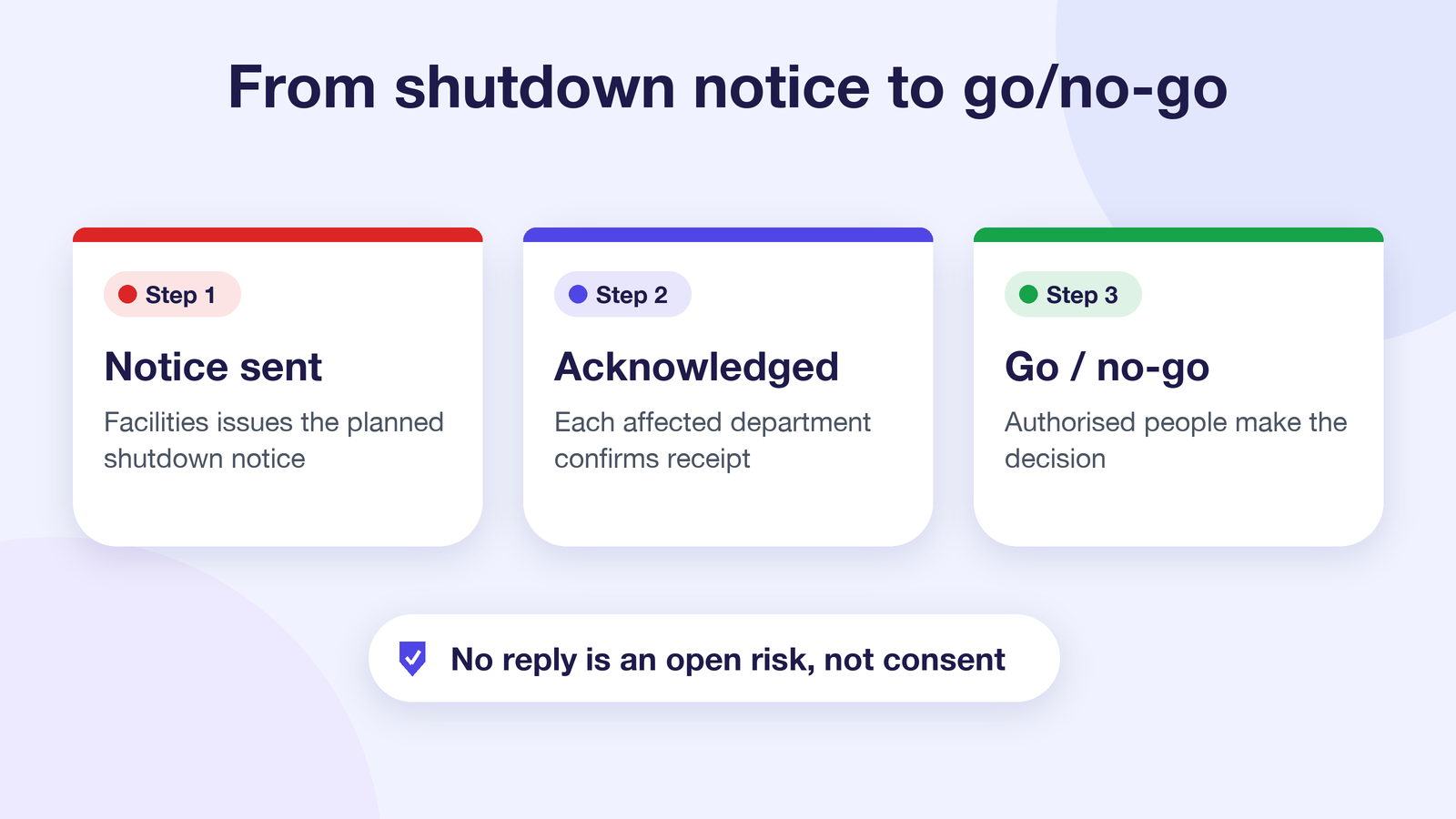
A project coordinator should not treat a message opened or a phone answered as approval. An acknowledgement means the recipient has confirmed receipt and, where applicable, reviewed the local implications. An approval means a designated authority has completed an actual decision step. Where approval requires written evidence or technical checks, record a link to the authorised evidence system rather than checking a generic ‘Yes’ box.
Use time-bound communication milestones
- Initial proposal: Facilities identifies the interruption, expected duration and affected locations; required specialists begin risk review.
- Pre-work coordination: Department owners review operational dependencies and contingency arrangements; objections are documented.
- Final readiness gate: The authorised group verifies permits, plans, backups, notifications and decision ownership. No automated call substitutes for this gate.
- Live communications: The hospital uses its approved command and communication process for unexpected conditions or changes.
- Restoration and closeout: Qualified personnel verify the service and communicate its approved return to normal operation. A reported reconnection is not sufficient evidence of safe restoration.
The CMS emergency preparedness framework identifies communication planning, power and equipment failures, and coordinated preparedness as important considerations. A planned-shutdown workflow should align with the hospital’s own emergency preparedness procedures rather than create an informal parallel channel.
Suggested monday.com coordination fields
A limited administrative board might use shutdown reference, utility category, affected service group, proposed work window, department contact role, notice required, notice sent, acknowledgement received, unresolved concern, formal approval evidence reference and next human action. Suggested states include Not yet notified, Notice sent, Acknowledged, Impact question open, Awaiting approval, Authorised by designated owner, Rescheduled, and Restoration verification pending.
Do not store sensitive infrastructure diagrams, clinical details or patient identities in an unrestricted board. Do not infer that an unanswered call means the department has no concerns. The absence of a response may be the very reason to delay the go/no-go decision until an authorised person has confirmed readiness.
What can a scheduled call appropriately ask?
A short non-clinical status call might ask: ‘Have you received the approved facilities notice for the stated work reference?’ ‘Is there an operational question that the coordination team needs to address?’ ‘Have you returned the required acknowledgement through the approved system?’ and ‘Would you like the facilities coordinator to contact you?’ It should not discuss patients by name, request restricted security instructions or invite the recipient to make an unrecorded approval over the phone.
The recipient should know that the caller is automated, why they are being contacted, and how to reach the human coordinator. The configuration must define consent or another lawful calling basis, appropriate hours, escalation contacts and data minimisation. Calls should not be the sole way of communicating urgent safety updates, especially where telephone coverage or network service itself could be affected.
Treat go/no-go as a controlled human decision
A final readiness review must address unresolved department concerns, applicable clinical consequences, technical isolation measures, backup capability, contractor readiness and planned restoration verification. A facilities engineer or other authorised leader makes the go/no-go decision under approved procedures. If a clinical unit reports that an alternative service is unavailable, the AI’s job is to flag and escalate that communication, never to negotiate or override the safety concern.
Likewise, an emergency or unexpected outage must follow the hospital’s existing response process. An informational status-call workflow is not an incident command system and should not delay direct escalation to hospital emergency contacts.
Example of an unresolved acknowledgement
Suppose facilities proposes a brief water-system maintenance interruption during a low-traffic window. Two affected departments acknowledge receipt, but another says its operations team has not completed contingency review. The board should show Impact question open and identify the department owner. A scheduled check-in can request an update, but the planned shutdown must remain subject to formal human readiness and authorisation. This is a process illustration, not a hospital case study.
After work, engineering verifies successful restoration through the applicable procedure and communicates the status through approved channels. A vendor’s verbal ‘finished’ report remains a useful log entry but is not evidence that services can safely resume everywhere.
Where Autoza may fit
The Autoza AI monday.com product describes scheduled status calls and board updates. An organisation could review this pattern for non-clinical notice acknowledgements where permitted, after privacy and IT security checks. The product page does not prove suitability for high-risk operational alerts or protected health information. Read healthcare AI calling escalation rules for related governance considerations.
Track acknowledgement latency, unresolved-impact questions, late change requests, unplanned schedule changes and whether every formal approval is evidenced. Do not optimise solely for ‘calls answered’. The project is successful when authorised people have the right information to make a safe, documented decision.
Next step: Audit one low-risk shutdown notice workflow, map departmental contacts and approval gates, and obtain hospital authorisation before discussing a scheduled status-calling pilot.
If your team uses monday.com and wants dependable follow-up on narrow, well-governed tasks, explore Autoza AI or request a workflow discussion.
Frequently asked questions
Who approves a planned hospital utility shutdown?
The hospital’s designated engineering, operations, clinical or other authorities under its site-specific policies and risk assessment. A phone-call acknowledgement cannot substitute for formal approval.
Which communications need confirmation?
At minimum, confirm the notice and its effect with every department identified by the approved impact assessment, then document unresolved questions, contingency dependencies and any required written acknowledgements.
Can AI determine whether the shutdown is safe to begin?
No. A caller may gather receipt confirmations and administrative status, but technical isolation, contingency readiness, patient-safety impact and go/no-go decisions require qualified human review.
What if an affected department does not acknowledge the notice?
Flag it as outstanding, follow the approved escalation path and ensure the final decision maker knows it remains unresolved. Do not treat non-response as consent or approval.
How should restoration be recorded?
Use the approved engineering verification and communication procedures. Separate a contractor’s completion report from the qualified confirmation that the utility is restored and safe for the affected operations.
Related reading
- What an AI Healthcare Project Caller Should Never Ask
- AI Calling Escalation Rules for Healthcare Administration Teams
- Healthcare Vendor Follow-Up Calls Without Sharing Patient Information
- Hospital Renovation Readiness: Track Contractor Tasks Around Infection Control
- Hospital Equipment Installations: A Non-Clinical Vendor Coordination Plan
- Autoza AI for monday.com: scheduled status calls
- Workflow automation services