
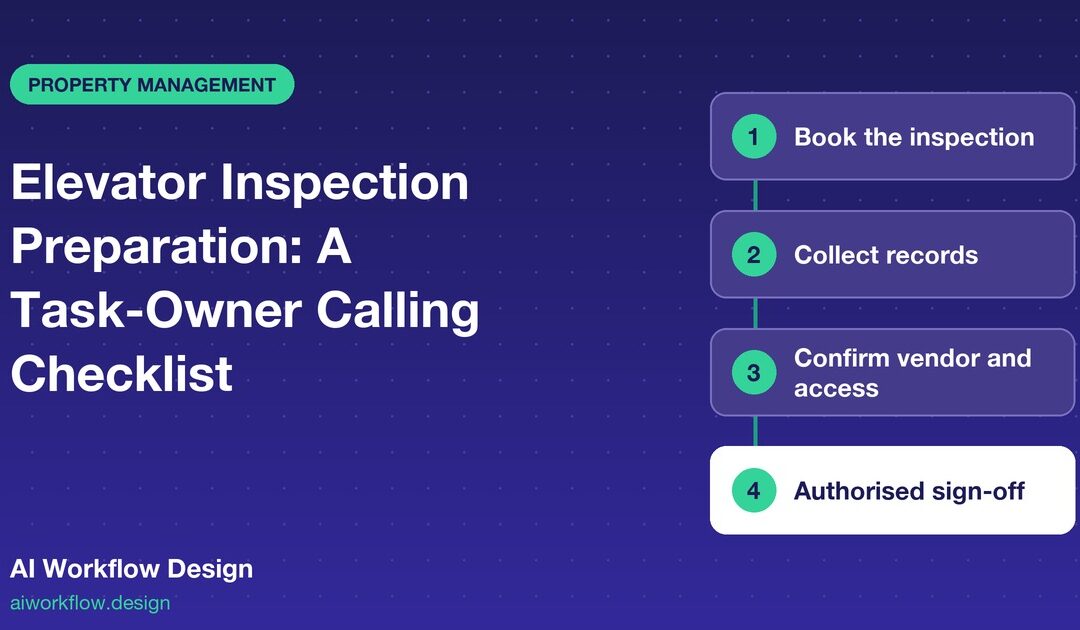
A property elevator inspection readiness checklist helps a building manager confirm that the required people, records, site access and outstanding maintenance actions are organised before an inspection. The checklist is an administrative coordination tool, not a substitute for inspection or certification. Only the authorised inspector, qualified elevator professionals and relevant jurisdictional authority can make technical and legal determinations about the elevator’s condition or operation.
Why lift inspections fail before the inspector arrives
Often the delay is not a complicated mechanical problem but a coordination failure. The inspector cannot access the machine room; the maintenance firm has not supplied the latest service log; a test witness is unavailable; building management has not prepared tenant notices; or an earlier deficiency is still unresolved. Each issue belongs to a different owner, yet a generic ‘inspection booked’ status hides all four.
Set up an inspection event record for each lift, with the equipment identifier, address, applicable authority, scheduled inspection type, booking confirmation, approved contact and dependency list. Reconfirm which edition of the applicable rules and inspection requirements applies locally, because elevator obligations vary by jurisdiction, use and equipment type.
Separate inspection standards from property-team coordination
The ASME A17.1/CSA B44 code covers elevator design, operation, inspection, testing and maintenance in jurisdictions that adopt it. The ASME A17.2 inspection guide addresses recommended inspection and testing procedures. These resources are not a universal checklist authorising a property employee to perform a test.
The manager’s responsibility is to schedule qualified parties, arrange safe access, preserve records and act on documented instructions. Technical work, testing, isolation, rescue and return-to-service decisions stay with the people who are authorised and competent to make them. Put those boundaries plainly in the work order and any AI calling script.
Build the inspection-readiness record
For each elevator, keep an administrative record containing equipment ID, location, service contractor, inspector or authority contact, inspection date, prior report status, current maintenance records, open corrective actions, safe-access requirements, witness attendance, tenant communication owner and document location. Use a controlled evidence link rather than copying full engineering records into a broad-access comment.
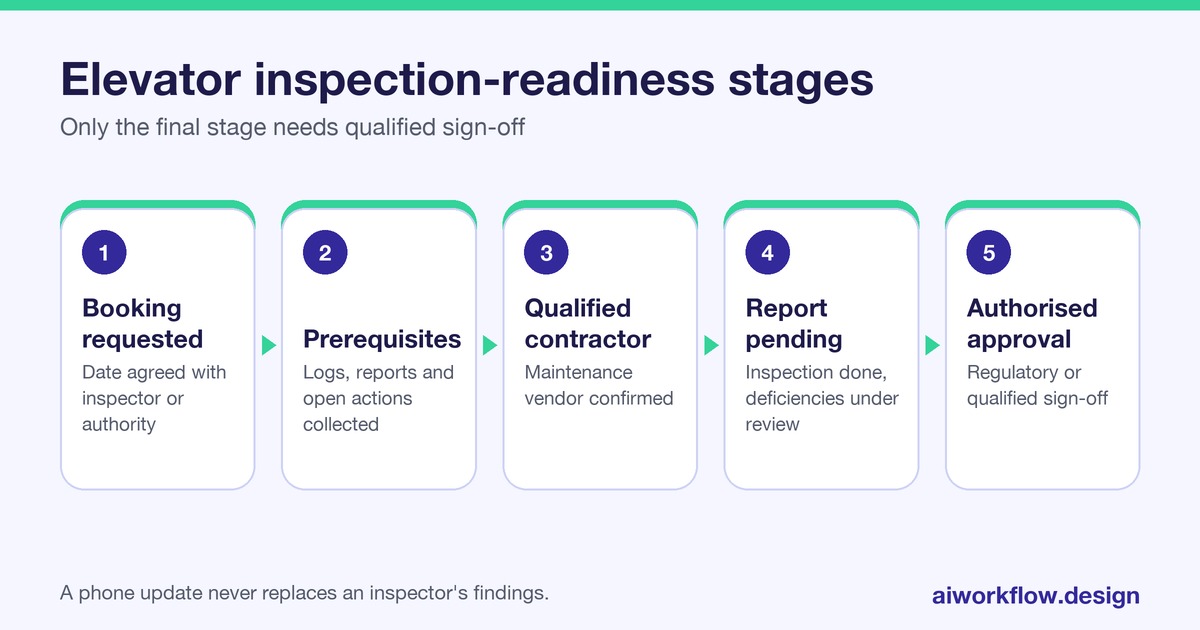
Recommended status stages are ‘booking requested’, ‘confirmed’, ‘prerequisites being collected’, ‘awaiting qualified contractor’, ‘inspection completed—report pending’, ‘deficiencies under review’ and ‘approved for operation by authorised process’. The first five can be tracked administratively. The final stage must be based on actual regulatory or qualified sign-off, not a service technician’s casual phone update.
Call owners at the right time—not all at once
At least two weeks ahead, ask the authorised inspection coordinator whether the booking, required witness and document list are confirmed. Several business days before the inspection, separately confirm the service contractor’s attendance, access needs and unresolved prerequisite repairs. One business day before, confirm the site contact, arrival process, permitted access, keys and notices. A short post-inspection call asks whether the formal report was issued and who owns any next step.
These timings are planning examples only. The authority’s required booking period and the service firm’s procedure take precedence. Do not use an automated call to pressure a qualified professional to skip a test, accelerate a safety release or change the assessment. If an elevator is already out of service, follow the property’s safety and accessibility communication plan.
Five questions worth asking the elevator maintenance vendor
A vendor check-in can ask: ‘Are you still confirmed to attend on the agreed date?’ ‘What administrative records do you need from building management?’ ‘Which open work orders could affect readiness?’ ‘Is a qualified test witness or specialist required?’ and ‘When can the next confirmed update be expected?’ The responses help a coordinator plan without entering technical judgments into a voice transcript.
An answer like ‘everything looks fine’ is too vague to mark a lift compliant. Record who said it, what they actually confirmed and which source report is still outstanding. If the vendor identifies an urgent safety concern, stop the routine workflow and follow the site emergency and competent-person escalation process.
Tenant access, accessibility and temporary downtime
Inspection work may involve disruption. Give residents, tenants and site teams accurate advance notices where required, including alternative accessibility arrangements, delivery impacts and a clearly identified contact for questions. The property manager should not declare an elevator unavailable or safe without input from the relevant qualified operator or authority; instead, communicate the confirmed status and expected next update.
For buildings with several elevators, coordinate scheduling so required accessibility and operating arrangements are maintained where feasible. Residents may need assistance that is not captured by a generic broadcast. Keep personal accommodation information in a restricted channel while using the maintenance board for site-wide operational updates.
Use monday.com without turning a status call into an inspection
A monday.com board can organise owner confirmations and linked evidence. AI Workflow Design describes Autoza AI as collecting scheduled status updates from people and writing summaries to a connected board. A proposed use is to follow up with the inspection coordinator and the maintenance vendor for dates, blockers or document-delivery status, subject to approved scripts and consent.
Map caller answers into a ‘reported readiness’ field, not into a ‘certified safe’ field. Give report acceptance, regulatory submission, required corrective action and return-to-service distinct human-owned tasks. For related property workflows, the site’s storm-recovery coordination guide demonstrates why reported work and professional assessment must remain separate.
Inspection-day readiness checklist
Before the visit, have the designated coordinator check five non-technical items: the booking reference and arrival window, the correct lift identifier, the contractor and inspector contacts, the agreed access route, and the location of the latest inspection or maintenance records. Ask the front desk or security team to confirm the visitor sign-in process. Where the inspection will interrupt service, verify that management has approved the notice and that accessible alternatives have been considered.
On the inspection day, the property representative should document attendance and any administrative delay, not accompany or instruct qualified personnel to undertake unsafe tests. Afterward, log the report reference and who must act on each issue. If a technician or inspector has not issued a result, leave that status pending rather than turning a completed appointment into a passed inspection.
A post-inspection closeout that survives review
Once the visit finishes, request the formal report or authority record through the approved channel. Link the correct version to the asset ID, assign each deficiency to the qualified responsible party and track a realistic completion and reinspection date if required. Distinguish ‘technician says repaired’, ‘evidence submitted’, ‘inspector accepted’ and ‘operating clearance received’. They are different facts.
Review what changed in the inspection process: missing keys, insufficient notice, slow documentation or overlooked prior work orders. Correct the administrative process before the next cycle. The outcome should be a usable inspection record and a clear path for unresolved items—not a board full of green statuses unsupported by evidence.
Next step
If scheduling is consuming your property team’s time, review AI Workflow Design’s scheduled check-in products to plan status collection that leaves inspection authority with qualified professionals.
Frequently asked questions
What should a property manager prepare before an elevator inspection?
Coordinate the booking, equipment ID, service records, previous reports, site access, qualified maintenance personnel, required witnesses and tenant notices. Check the jurisdiction-specific requirements with the inspection authority.
Can property staff conduct elevator safety tests?
Not unless they are specifically qualified and authorised under the applicable requirements. Formal tests, inspections and technical release decisions belong to competent professionals and the appropriate authority.
Can AI calls confirm an elevator passed inspection?
No. They can confirm whether a formal report has arrived and who is responsible for it. An official inspection outcome requires the real report and authorised review.
How should an inspection delay be communicated to tenants?
Share only verified service-impact information, expected updates and accessibility arrangements through the property’s approved communications process. Avoid promising a return-to-service time that has not been confirmed.
What should happen after a failed inspection?
Link the findings to the asset, assign corrective actions, preserve the report, and arrange any required reinspection or authorisation. Keep the affected elevator subject to the applicable operating restrictions.
Related reading
- Storm Recovery Work Orders: A Property Vendor Update Checklist
- Preventive Maintenance Visits: A Vendor Confirmation Workflow for Property Managers
- Mapping Vendor Call Answers to monday.com Maintenance Status Fields
- No-Access Maintenance Visits: How to Reschedule Vendors and Residents
- Vendor Insurance Expiry: A Property Maintenance COI Follow-Up Schedule