
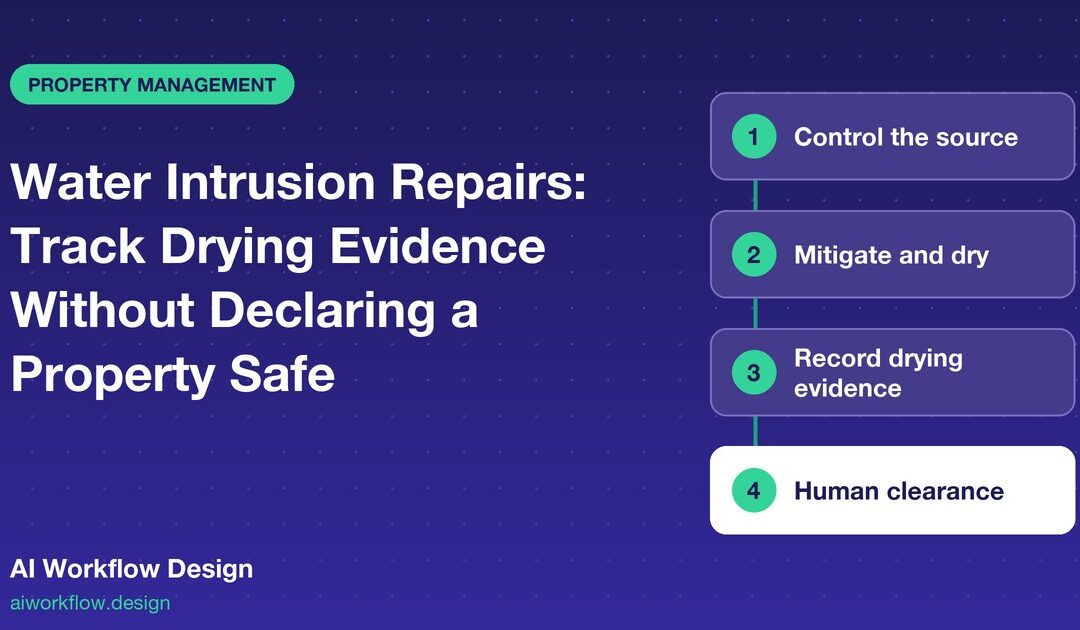
Property water intrusion remediation follow-up should document what happened, which part of a building is affected, who is responding, which drying or repair records exist, and which qualified assessment remains outstanding. A contractor saying ‘the fans have finished’ is not proof that the moisture source was fixed, hidden materials are dry, electrical risks are resolved, or the unit is safe to occupy. Project-management updates support coordination; they do not grant professional clearance.
Treat the first report as an incident, not a routine ticket
A leak from a roof, plumbing line or adjacent unit may affect several rooms and systems. Record when it was discovered, the locations affected, the suspected source, immediate reports of electrical or structural concern, the person responsible for emergency response and the actions authorised by that person. Separate emergency contact details from everyday project notes. If flooding, contaminated water or dangerous electrical conditions are suspected, follow the property’s emergency procedure and involve the appropriate professionals.
Do not wait for the perfect board configuration to begin urgent human-led response. The EPA’s guidance on mould and moisture stresses fixing the water problem and, where possible, drying affected items promptly—typically within 24–48 hours to reduce mould risk. That is prevention guidance, not a deadline for declaring a damaged area safe.
Separate source control, mitigation and final restoration
Create distinct work orders for stopping the water source, assessing damage, extracting standing water, removing or drying affected materials, specialist testing where appropriate, restoration and resident communications. A single ‘water leak resolved’ status collapses very different decisions. For example, a plumber can repair a supply line while a wall cavity still requires assessment and drying by another professional.
Use dependencies to prevent premature finish work. Repainting should not be treated as a valid closure step if the moisture problem remains or the required inspection has not taken place. When the origin is unknown, label it ‘under assessment’ rather than inventing a cause from a telephone report.
Build a drying-evidence register
For each affected area, track building and unit identifier, incident date, contractor, authorised access, work category, start time, equipment used, moisture-measurement record location, materials removed or retained, next site visit, outstanding assessment and reviewer. Keep sensitive resident information, detailed photographs and specialist reports in a controlled repository instead of a widely shared call history.
The EPA commercial-building remediation guidance gives material-specific examples of cleanup actions and explains that the correct response depends on the material and conditions. A status board should therefore link to the actual contractor or assessor evidence, not replace it with a generic ‘dry’ checkbox.
Ask contractors questions that have factual answers
A focused status call can ask which assigned area was visited, whether mitigation was performed as planned, which records were uploaded, what additional access is needed and when the next update will be provided. The call should invite ‘unable to assess’ and ‘specialist review pending’. Do not ask an AI caller to decide whether a property has hazardous mould, whether structural materials are sound or whether a tenant may return.
If the contractor reports a new leak, unsafe conditions, contamination or a different damage extent, route the issue to the human incident owner immediately. Where recording is used, confirm permissions and use a short script. A transcript is not a substitute for the qualified person’s report, and it may contain information that deserves restricted access.
An illustrative 0–24–48-hour coordination timeline
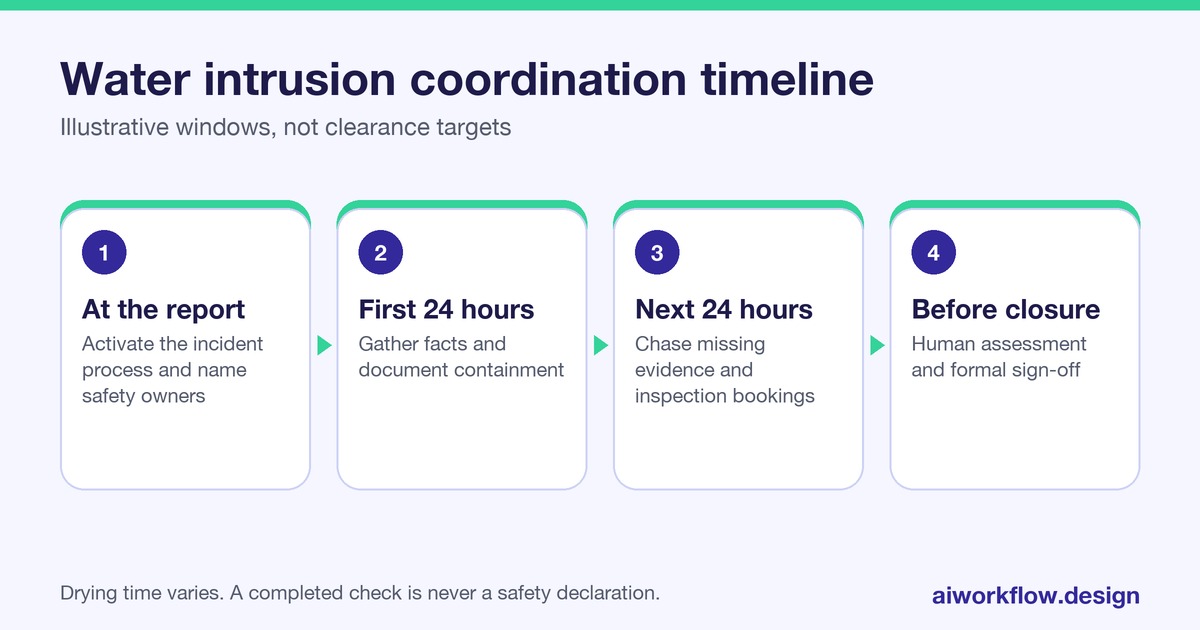
At the initial report, the property team activates the incident process and records the authorised safety and mitigation owners. During the first 24 hours, coordinators gather known facts, confirm contractor attendance and document what containment and extraction took place. Within the next 24 hours, they pursue missing evidence, confirm inspection bookings and track drying and repair dependencies. These are illustrative coordination windows, not clearance targets or universal regulations.
Water damage may need longer drying, specialist work or extensive rebuilding. The time needed depends on materials, contamination, climate and damage severity. Never convert a ’48-hour check completed’ event into ‘property safe’. Human-led assessment and relevant regulatory or insurance steps remain separate from ordinary project follow-up.
Resident updates need a controlled communication owner
Residents need clear, factual updates about access restrictions, temporary services, follow-up appointments and who to contact. Avoid sharing another resident’s details or detailed insurance data. When a unit cannot be used, property management should follow its applicable legal and emergency procedures for notice, access, accommodation and return; these can vary by location and tenancy agreement.
Status-call information can help a resident communication owner answer ‘what is the next confirmed step?’, but that owner should verify any material changes before distributing them. ‘Drying equipment removed’ should be communicated as just that—not ‘all conditions are safe’ or ‘your belongings cannot be affected’.
Where Autoza may assist without providing technical clearance
AI Workflow Design describes scheduled calls and board updates for teams already using monday.com. A carefully configured use could ask non-emergency contractors whether a visit occurred, whether evidence was uploaded and whether access is required tomorrow. The resulting answers can update a vendor-reported progress field while the qualified property or remediation reviewer maintains the authorised completion status.
For a related multi-vendor scenario, see storm recovery work-order coordination. The same principle applies: collect reliable logistical information, maintain an exception route and retain professional conclusions in their source documents. Confirm actual product configuration and jurisdictional calling requirements before deploying any automated script.
A contractor update versus a technical finding
For example, an illustrative vendor report might say: “Attended Unit 3B, removed standing water, drying units operating, reassessment due tomorrow.” That is an operational update. A separate specialist record might say that selected materials need further investigation before finishes can be reinstated. The property team should store both, showing the distinct time, author and authority of each report. Neither statement authorises a resident to return unless the appropriate decision-maker has reviewed the conditions.
This distinction is especially valuable when several contractors attend the same loss. The plumber may finish a pipe repair, the drying contractor may continue to monitor materials, and the electrician may still have restrictions in place. A single completion percentage masks those dependencies.
Close only after evidence and review are complete
Before closure, confirm that the water source has been addressed, appropriate drying and remedial work is documented, required professional assessment is complete, remaining repairs and resident communication have owners, and the organisation’s reviewer has accepted the result under its procedures. The evidence may include moisture logs, photographs, specialist reports, invoices and permits, depending on the incident.
A useful success measure is not ‘how quickly the board turned green’. It is whether the team prevented missed follow-ups and retained a defensible record of who did what, when and under whose authority. Keep open items visible even if the original emergency has passed.
Next step
Want to reduce routine vendor chasing while protecting safety decisions? Explore AI Workflow Design’s scheduled check-in products and map the contractor-status fields your reviewers actually need.
Frequently asked questions
How often should contractors update water damage drying status?
Use a cadence based on the incident plan and the qualified remediation provider’s process. More frequent reporting may be necessary while damage is active, but a daily check-in alone is not evidence that materials are dry.
Does removal of dehumidifiers mean the building is safe?
No. Equipment removal is an activity record. Relevant moisture, structural, electrical, air-quality or other assessments—and any required clearance—must be reviewed by qualified and authorised people.
What water intrusion documents should a property manager keep?
Maintain an incident timeline, source-repair records, contractor attendance, drying or moisture logs, specialist findings, approved restoration actions and resident communications in controlled locations.
Can an AI caller decide when tenants may return?
No. Occupancy decisions depend on the actual conditions, applicable requirements and authorised people or authorities. AI can collect logistical status and flag issues for human review.
What is the key prevention step after water damage?
Identify and fix the water source promptly, then use the appropriate drying and remediation process for the affected materials. The EPA emphasises moisture control as central to preventing mould.
Related reading
- Storm Recovery Work Orders: A Property Vendor Update Checklist
- After-Hours Property Repairs: A Triage and Human Escalation Plan
- Vendor Calls vs Portal Notifications: Which Repair Updates Need Human Attention?
- Preventive Maintenance Visits: A Vendor Confirmation Workflow for Property Managers
- Elevator Inspection Preparation: A Task-Owner Calling Checklist